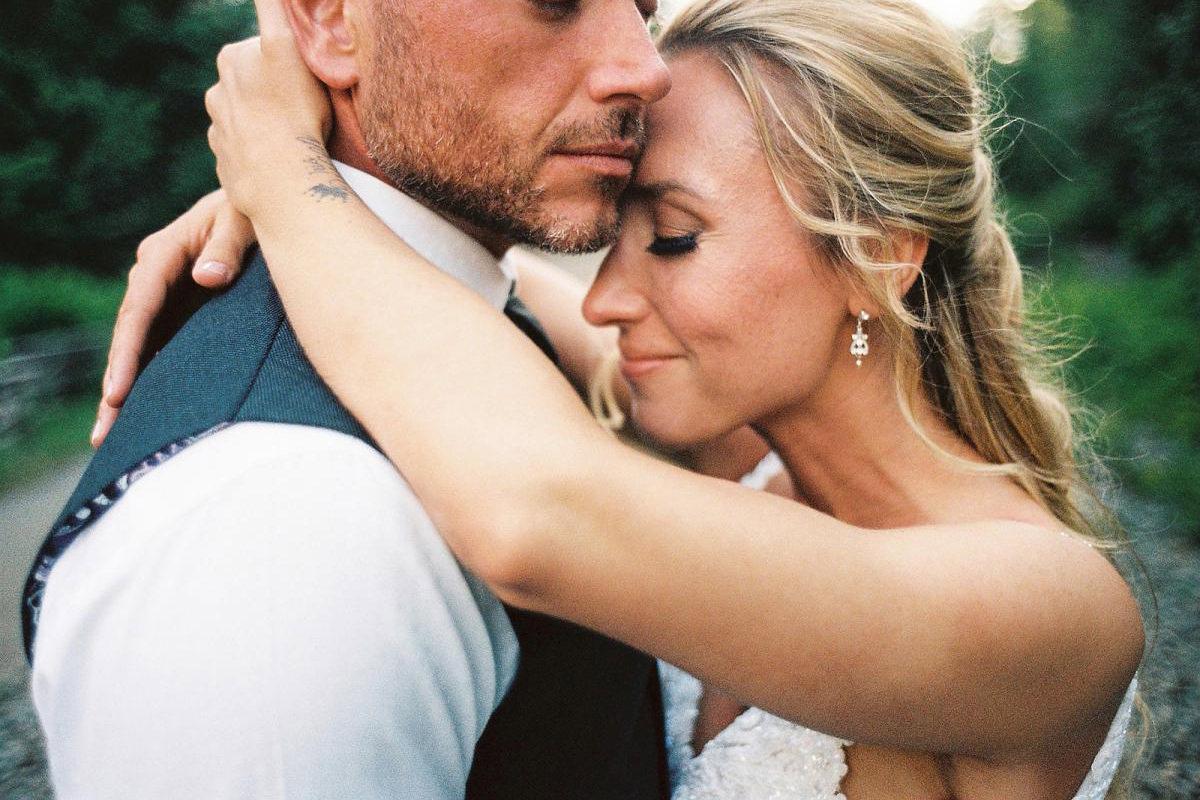
Film at Weddings: Why Some Canadian Photographers Are Going Back to Analog
In 2026, when cameras can autofocus in near-darkness, AI can cull a thousand images in three minutes, and a single memory card can hold an entire wedding, a small but growing number of Canadian wedding photographers are doing something that looks, from a distance, like regression.
They're shooting film.
Not exclusively, in most cases. The majority of film-shooting wedding photographers carry digital bodies as their primary system and a film camera as a complement. But the film component — the thirty-six frames per roll, the manual focus, the complete absence of a screen to check — is deliberate. It's not nostalgia. It's a creative choice that changes the way the photographer thinks, sees, and ultimately delivers.
This is the final article in our Art of Wedding Photography series.
The Film Resurgence
Film never completely disappeared from wedding photography. Even during the digital transition of the mid-2000s, a handful of photographers kept shooting it — partly from preference, partly from a conviction that film rendered skin tones, colour, and light in ways that digital hadn't yet matched.
What's changed in recent years is the context. Film has gone from holdout to choice. Photographers who grew up digital — who learned on DSLs and have never known the cost of a misfire — are deliberately adding film to their workflow. The reasons vary, but they cluster around three themes: the discipline film imposes, the aesthetic it produces, and the experience it creates for the photographer.
The Discipline of Thirty-Six Frames
A digital photographer at a wedding might shoot three thousand images. Some shoot five thousand. The marginal cost of each frame is zero — storage is cheap, cards are large, and any frame that doesn't work gets deleted in post.
A film photographer at a wedding might shoot three hundred frames. Each frame costs money — the film stock, the processing, the scanning. Each frame is irrevocable — there's no chimping, no reviewing on the back of the camera, no deleting and reshooting. You commit to the moment, advance the frame, and move on.
This constraint changes behaviour fundamentally. The film photographer thinks before they shoot. They assess the light more carefully because there's no histogram to check. They compose more deliberately because they can't crop aggressively in post without losing resolution. They wait for the decisive moment instead of bracketing through a burst of twelve frames and choosing the best one later.
The result, paradoxically, is that film photographers often miss fewer meaningful moments than digital photographers. Not because they have faster reflexes, but because the discipline of limited frames forces a deeper engagement with what's actually happening. When you can only shoot thirty-six frames before reloading, you become very good at recognizing which moments are worth a frame.
The Aesthetic Argument
Film renders light differently than digital. The highlights roll off more gradually. The shadows retain a different kind of texture. The grain — which is a physical property of silver halide crystals, not an electronic noise pattern — has a quality that's difficult to replicate in post-processing.
Colour is the most discussed difference. Film stocks like Kodak Portra 400 and Fuji Pro 400H (though the latter is now discontinued) produce skin tones that many photographers describe as more natural, warmer, and more three-dimensional than digital equivalents. Whether this is objective or subjective is debatable, but the preference is real — a significant number of photographers and clients prefer the way people look on film.
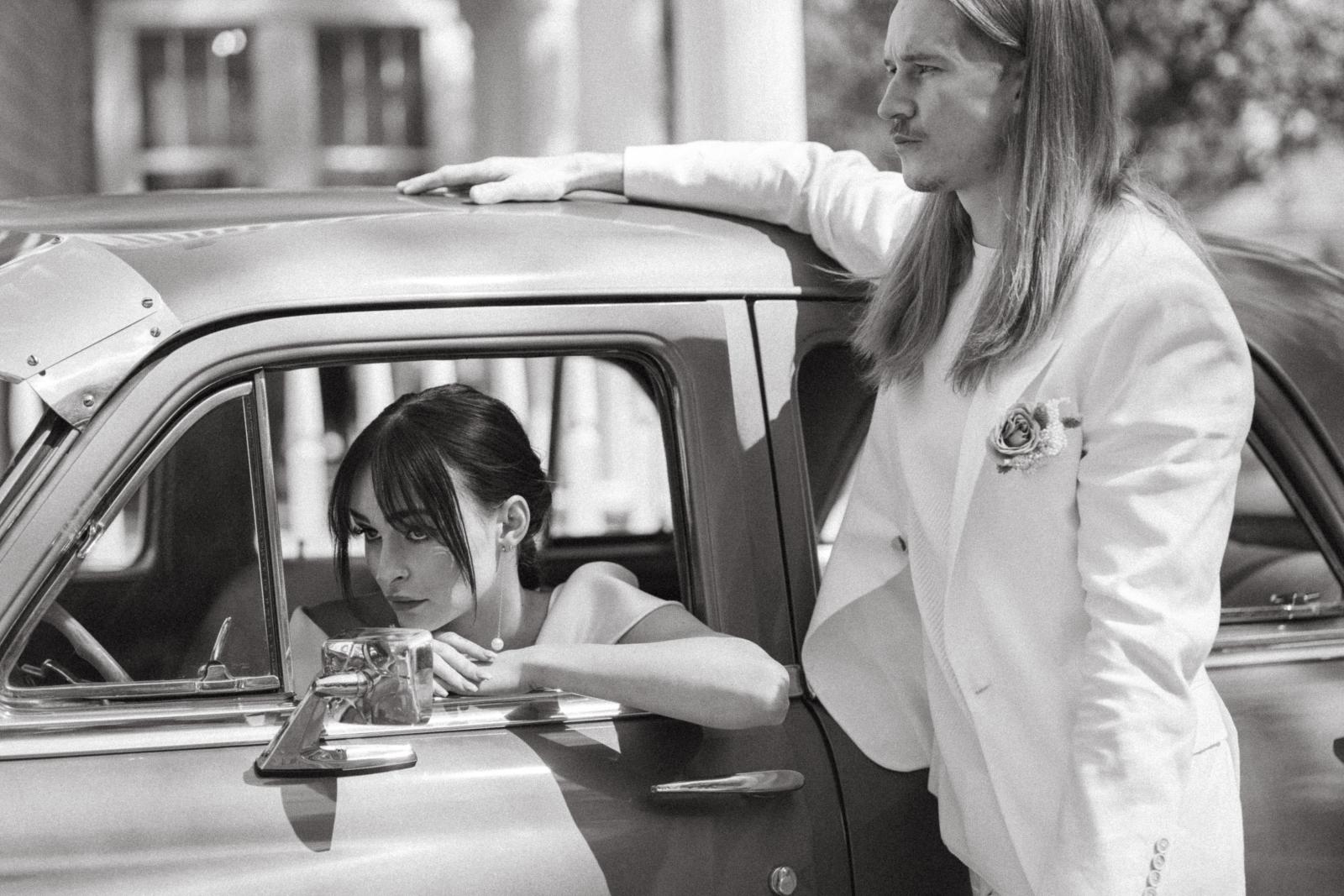
The more subtle aesthetic difference is imperfection. Film images have a character that comes from the medium itself. Slight inconsistencies in exposure between frames. The particular way a lens and film stock interact. The unavoidable grain. These imperfections contribute to an organic quality that digital images — even heavily processed ones — struggle to replicate because digital's nature is precision and consistency.
This isn't to say film is better. It's different. And the difference matters to certain photographers and certain clients who respond to the specific quality that film provides.
Film as a Creative Reset
Many of the photographers who've added film to their wedding workflow describe it less as a technical choice and more as a creative one. Film slows them down. It forces intentionality. It reconnects them to the fundamentals of photography — light, composition, timing — in a way that the digital workflow's speed and volume can erode.
This is the creative-reset argument: that shooting some of a wedding on film makes the photographer a better photographer for the rest of the wedding, even when they switch back to digital. The discipline carries over. The heightened attention to light carries over. The willingness to wait for the right moment rather than spraying frames carries over.
Some photographers use film exclusively for portraits. The slower pace of loading film, the deliberate nature of manual focus, and the limited frame count create a different energy during the portrait session — one that the couple often responds to. When the photographer takes their time, the couple takes their time. The result can be images with a calm, intimate quality that the rapid-fire digital session doesn't produce.
The Practical Realities
Film at weddings isn't without challenges, and any photographer considering it should understand what they're taking on.
Cost. Film stock, processing, and high-quality scanning cost money. A roll of Kodak Portra 400 in 120 format gives you roughly twelve to sixteen frames. Multiply by the number of rolls shot at a wedding, add processing and scanning, and the per-wedding cost is significant. This needs to be factored into pricing.
Turnaround. Film needs to be developed and scanned, which takes time. Photographers who offer film as part of their deliverable need to manage client expectations about delivery timelines. The digital images might be ready in weeks; the film images might take longer.
Reliability. Film cameras are mechanical. They can fail. The film can be damaged by heat, X-rays (at airports for destination weddings), or processing errors. No professional wedding photographer should rely solely on film for any essential moment. Digital provides the safety net; film provides the complement.
Lab quality. The quality of the final film image depends heavily on the lab that processes and scans it. A great negative poorly scanned looks terrible. Finding a reliable lab — and many Canadian photographers use Canadian labs like Richard Photo Lab or Photovision — is essential.
Hybrid Shooting: The Practical Approach
The dominant model for film at weddings in 2026 is hybrid: digital as the primary system, film as a selective complement. The photographer shoots the essential coverage — ceremony, speeches, dance floor — on digital for reliability and volume. They shoot film for moments that benefit from the medium's specific qualities: portraits, getting-ready details, the environmental shots that establish mood.
This hybrid approach gives the client a complete gallery (all digital, professionally edited) plus a set of film images that have a distinct aesthetic quality. The film images become a curated subset — a collection within the collection that feels different and often special precisely because they're distinct from the rest.
Some photographers present the film images separately, almost as a mini-album within the gallery. Others integrate them seamlessly. The approach depends on the consistency of the digital and film aesthetics and the photographer's editorial judgment.
What Film Means for the Profession
The film resurgence isn't going to replace digital wedding photography. The practical advantages of digital — instant review, high volume, low per-frame cost, low-light performance, AI-assisted workflow — are too significant.
But film's persistence says something meaningful about the profession. In an era of infinite frames, some photographers are choosing limitation. In an era of instant feedback, they're choosing trust. In an era where technology handles more and more of the technical burden, they're choosing to engage with the craft at its most fundamental level.
That's not regression. That's a photographer who knows what they're looking for and has decided that sometimes the oldest tool is the right one.
Series Conclusion
This is the twelfth and final article in The Art of Wedding Photography series. From developing your eye to reading light to finding your style, this series has explored the creative foundations that separate skilled wedding photographers from the rest.
The craft doesn't stop here. Explore our other series:
- The Business of Wedding Photography — turn your passion into revenue
- The Luxury Client Experience — elevating every touchpoint
- Wedding Photography in the Era of A.I. — what's changing and what's not
And browse the work of photographers who've mastered the craft in the CWP member directory. The Canadian Wedding Photography Awards recognize the best of this work six times a year.