What You Learn from the Disasters: Lessons from the Shoots That Didn't Go as Planned
"I've learned from every shoot — even the ones I thought were disasters."
Every wedding photographer has a disaster story. The ones they tell at industry events after a couple of drinks, half-laughing, half-wincing. The wedding where the rain started during the outdoor ceremony and didn't stop. The one where the memory card corrupted. The reception where the venue's lighting made everyone look green and there was nothing they could do about it. The first dance where the DJ killed the lights and the photographer was shooting at ISO 12800 in near-darkness, hoping for one usable frame.
These stories are funny in retrospect. They were not funny at the time. At the time, they were stomach-dropping, career-questioning, lying-awake-at-3am experiences. And every single one of them made the photographer better.
This is the eighth article in our Art of Wedding Photography series.
Why Disasters Teach More Than Successes
A good wedding — cooperative weather, ample time, gorgeous light, relaxed couple — teaches you that your preparation worked. It confirms what you already know. The images come easily because the conditions were generous, and you leave feeling competent and validated.
A disaster teaches you something new. It forces you into territory where your preparation wasn't enough, where your default approach doesn't work, where you have to invent solutions in real time with no safety net. Every photographer who's worked through a genuine disaster comes out the other side with at least one new skill, one new backup plan, or one new instinct that they didn't have before.
The photographer who's only ever shot in perfect conditions is, paradoxically, less prepared than the one who's survived a dozen catastrophes. The perfect-conditions photographer has never been tested. The disaster survivor has been tested, failed at parts of it, and figured out how to fail less the next time.
The Weather Disaster
Canadian wedding photographers have a special relationship with weather. A June wedding in the Okanagan can turn from golden hour to thunderstorm in twenty minutes. A September ceremony on the East Coast can go from sunshine to sideways rain without warning. A January wedding in Winnipeg means temperatures that can freeze camera batteries.
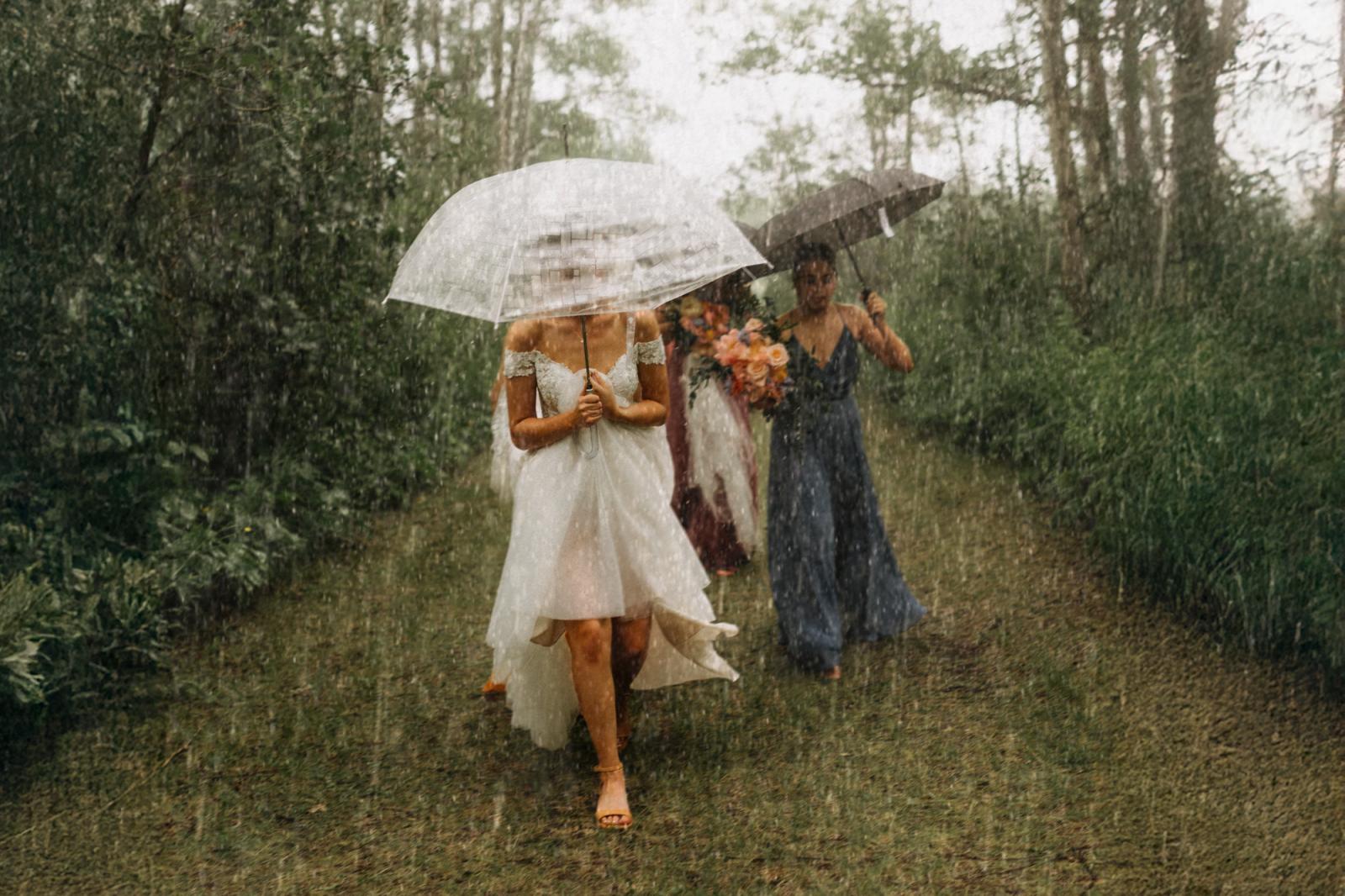
The first time you lose an outdoor ceremony to rain, it's devastating. You had the compositions planned, the light scouted, the timeline built around golden hour portraits. And now everyone's under a tent, the ambient light is flat grey, and the couple is trying to pretend they're not disappointed.
What you learn: flat grey light is some of the most flattering portrait light that exists. Wet surfaces create reflections that add depth to every image. Rain itself, backlit, can be one of the most dramatic elements in a wedding photograph. Umbrellas are a compositional gift. And the couple's emotional response to the adversity — the moment they decide to laugh about it, the moment they kiss in the rain anyway — produces images with ten times the emotional charge of a sunny golden hour portrait.
The photographer who's survived the weather disaster doesn't fear overcast anymore. They welcome it. They know what it offers.
The Timeline Collapse
Every wedding photographer has experienced the timeline collapse. The ceremony runs forty-five minutes late. The limo gets lost. The bridal party takes an hour to get ready when the schedule allowed thirty minutes. The family formals that should have taken fifteen minutes take forty because Uncle Frank can't be found.
Suddenly the portrait session that was supposed to be ninety minutes is thirty. The golden hour you planned for is gone. The couple is stressed, the planner is frantic, and you have a fraction of the time you expected to deliver the images that matter most.
What you learn: you can get extraordinary portraits in fifteen minutes if you know what you're doing. You learn to strip your approach down to essentials — the one location that's closest, the three compositions that work fastest, the directing approach that gets genuine emotion immediately instead of building to it. You learn that a compressed timeline often produces more urgent, more alive images than a leisurely one, because nobody has time to overthink.
You also learn the planning lesson: build buffer into every timeline, assume everything will take longer than expected, and identify your non-negotiable shots so you know exactly what to prioritize when time disappears.
The Gear Failure
Camera bodies die. Cards corrupt. Flash units stop firing. Lenses develop autofocus problems mid-wedding. Batteries drain faster than expected in cold weather. Every photographer who's been in the industry long enough has experienced equipment failure at the worst possible moment.
What you learn: redundancy is non-negotiable. Two camera bodies. Multiple memory cards. Backup flash. Spare batteries in a warm pocket. The gear failure disaster teaches you to prepare for equipment as if everything will break, because eventually something will.
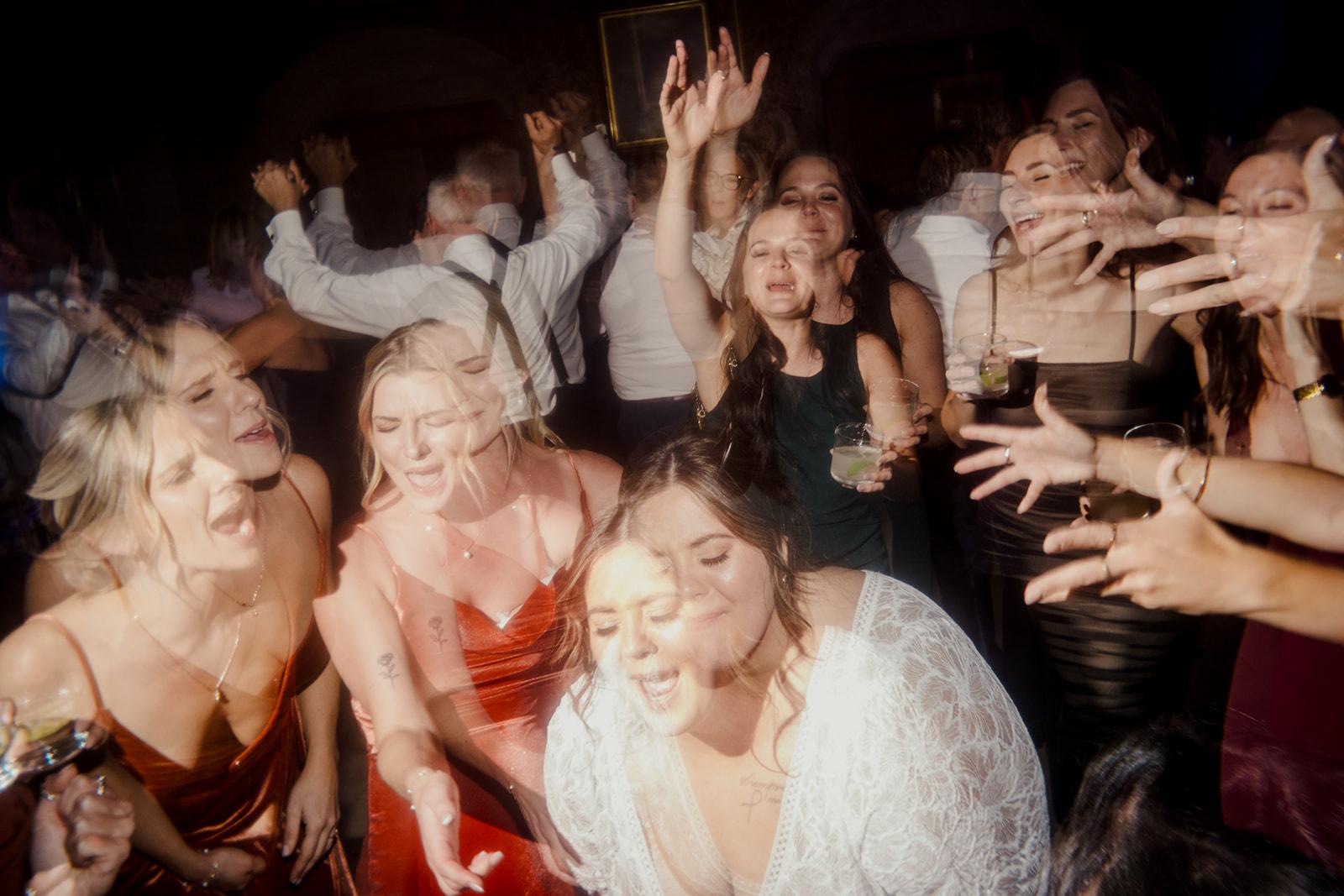
But the deeper lesson is creative, not logistical. When your primary lens fails and you're shooting the entire reception on a 35mm instead of the 85mm you planned, you discover compositions you never would have found otherwise. When the flash dies and you're working with available light only, you push your camera's capabilities further than you thought possible, and some of the resulting images have a raw, atmospheric quality that flash would have destroyed.
Constraints force creativity. The photographer who's survived gear failure knows this at a cellular level.
The Difficult Client Situation
Not every disaster is environmental or mechanical. Some are interpersonal. The couple who argues during portraits. The family member who's had too much to drink and is creating scenes. The parent who insists on directing the photography and won't stop offering suggestions. The vendor who isn't cooperating — the DJ who refuses to turn down the uplighting, the planner who keeps moving the timeline without telling the photographer.
These situations are uncomfortable, and there's no lens choice or ISO setting that solves them. What they teach is emotional intelligence. How to de-escalate without overstepping. How to redirect without confronting. How to maintain professionalism when the environment is chaotic. How to protect the couple's experience even when the couple isn't making it easy.
The photographer who navigates a difficult interpersonal situation well becomes the calming presence at every subsequent wedding. They've seen stress. They know how people behave under it. They don't panic, because they've been through worse and found a way through.
The Image You Missed
The most painful disaster isn't external. It's the one you create yourself. The moment you saw happening and didn't react fast enough. The composition you noticed a second too late. The outtake that would have been extraordinary if you'd been facing the right direction.
Every experienced photographer carries a mental catalogue of missed images. The catalogue never empties — you just add to it more slowly as you get better. But the missed images teach you more about your own weaknesses than any workshop or tutorial. They show you where your attention lapses, where your instincts are slow, where your technical habits create blind spots.
The missed image from your thirtieth wedding becomes the captured image at your fiftieth, because you never forgot the feeling of watching something beautiful happen and not being ready.
Building the Disaster Toolkit
Every disaster survived adds a tool to the toolkit. After enough disasters, the toolkit becomes comprehensive enough that very little genuinely surprises you anymore. The weather changes? You have a plan. The timeline collapses? You know your minimums. The gear fails? You have backup. The situation gets interpersonally complicated? You've handled worse.
This is what experience actually means in wedding photography. Not just the number of weddings shot, but the range of conditions survived. A photographer with two hundred weddings — all of them in perfect conditions — has less experience than a photographer with a hundred weddings that included every kind of disaster the profession can produce.
The Canadian Wedding Photography Awards celebrate the images that emerge from this kind of hard-won experience. The winning photographs aren't made in perfect conditions. They're made by photographers who've been through enough difficulty to know how to find beauty in whatever the day offers.
"You learn from both the positive and the negative." The negative just teaches faster.
Continue the series
This is the eighth article in The Art of Wedding Photography series. Next: Documentary vs. Editorial: Two Philosophies, One Wedding Day.
Browse experienced photographers who've earned their disaster stories in the CWP member directory.