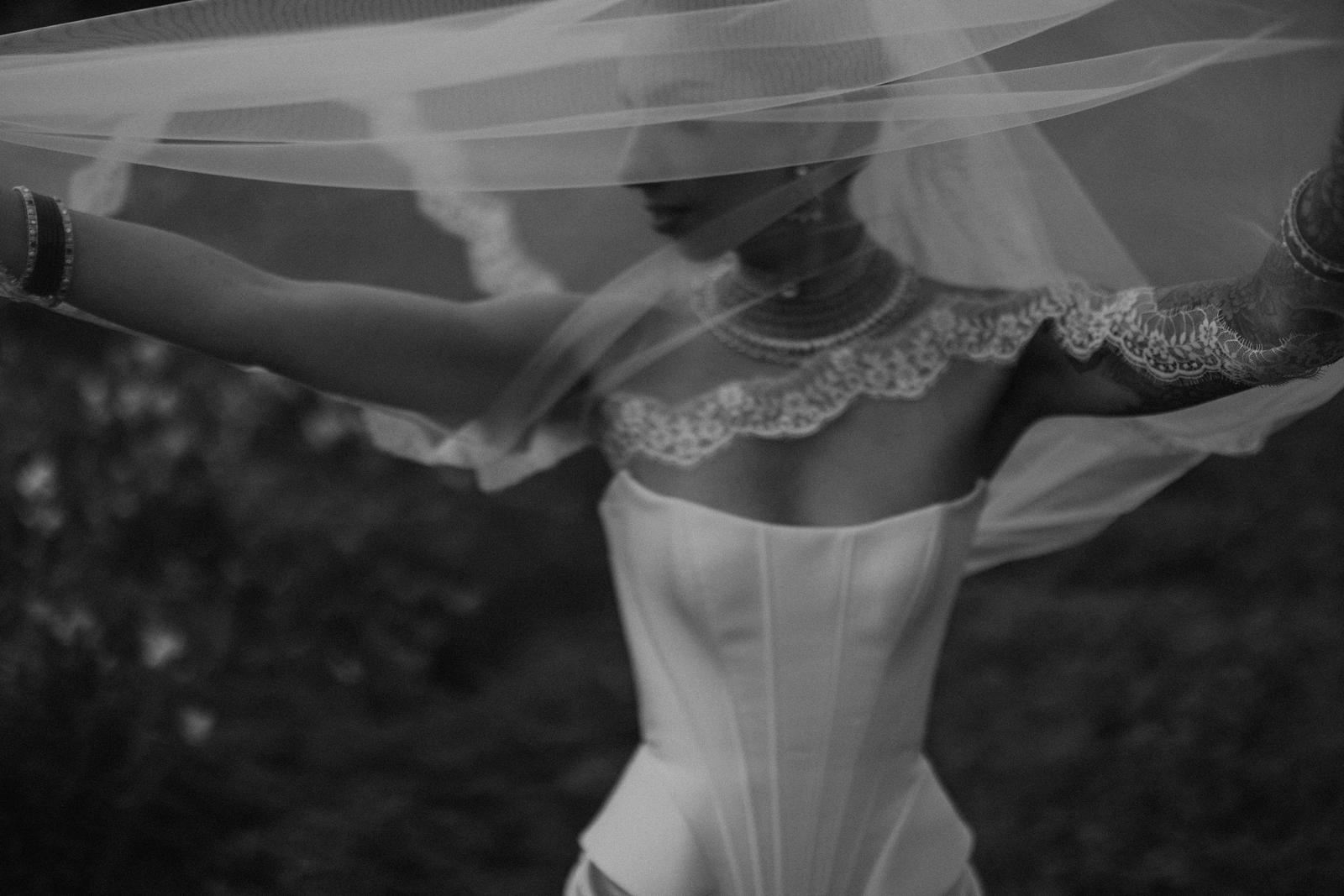
Directing Without Posing: How to Get Natural-Looking Photos of Real People
"I'm their friend, not the enemy behind the camera."
That single sentence captures a philosophy that separates the best wedding photographers from the merely competent. The camera can feel adversarial. It can make people self-conscious, awkward, and stiff. The photographer who recognizes this — and actively works against it — produces portraits where people look like themselves rather than mannequins holding a pose.
Here's the uncomfortable truth about posing: most people hate it. They don't know what to do with their hands. They don't know which angle is their "good side." They smile on command and it looks like a smile on command. The more a photographer poses them, the more they feel like a subject being arranged, and the more the resulting images feel like a transaction rather than a moment.
The alternative isn't chaos. It's direction. And there's a meaningful difference.
This is the fifth article in our Art of Wedding Photography series.
Posing vs. Directing: The Distinction That Changes Everything
Posing is outside-in. The photographer has a composition in mind and moves the subject into it. "Turn your shoulders this way. Tilt your chin down. Put your hand on his chest. Hold it." The image is constructed from the photographer's vision, and the subject's job is to comply.
Directing is inside-out. The photographer creates a situation that produces natural emotion, movement, or interaction, and photographs what happens. "Walk toward me and whisper something that'll make her laugh." "Close your eyes and just hold each other for a minute." "Dance — I don't care how bad it is." The composition emerges from the behaviour, and the subject's job is to be themselves.
The visual difference is immediate. Posed images have a stillness and precision that reads as formal. Directed images have movement, genuine expression, and the slightly imperfect framing that comes from photographing something alive. Both have their place, but the images couples love most — the ones they frame, the ones that make them feel something years later — are almost always the directed ones.
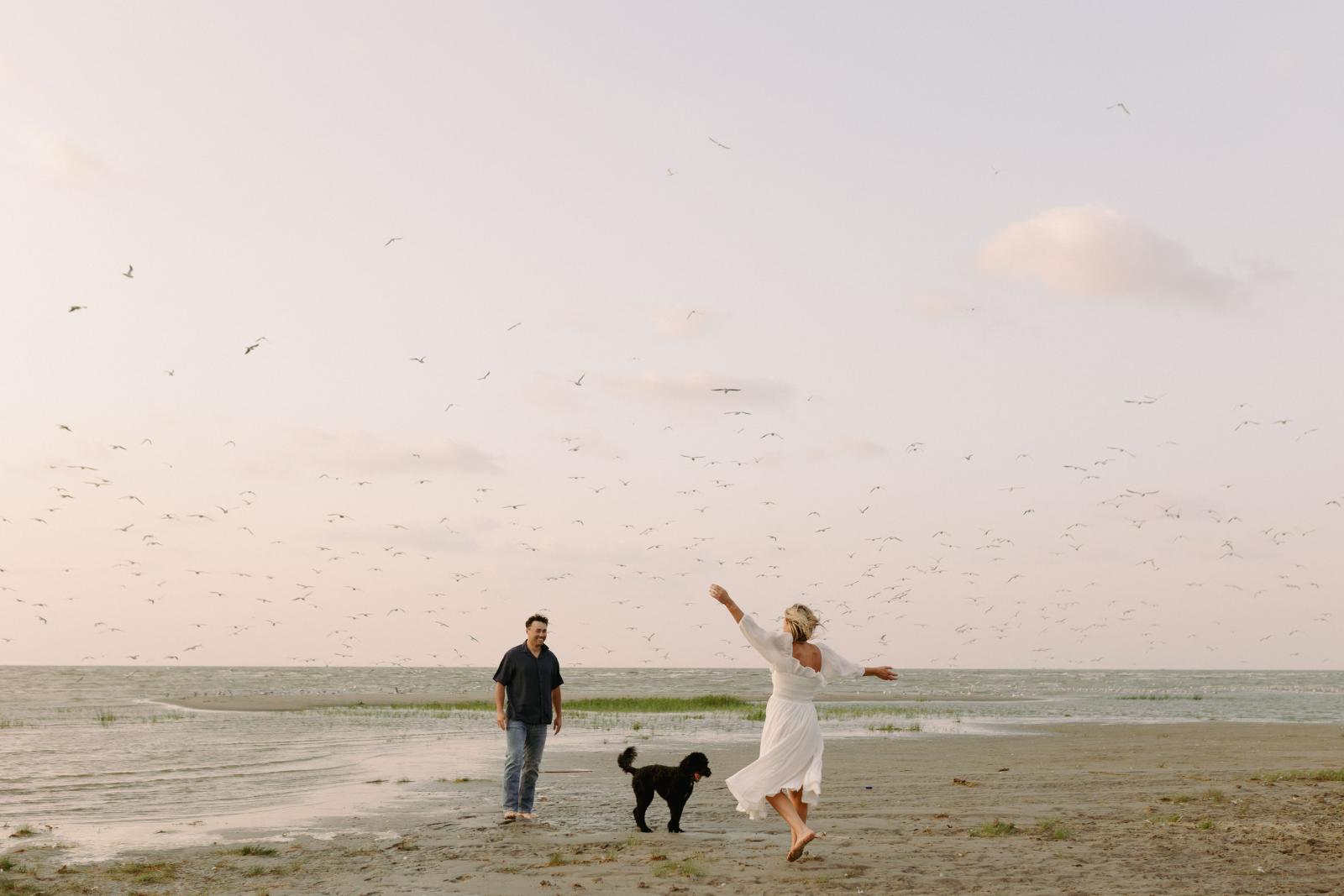
Breaking Down the Guard
The biggest obstacle to natural photographs isn't technical. It's psychological. People arrive at their wedding portrait session with a guard up. They've seen a thousand wedding photos on Instagram. They have expectations about how they should look, how they should stand, what expression they should wear. They're performing "wedding couple" rather than being themselves.
The photographer's first job is to break that guard down. "If you can't get the guard down, there's no trust. And if there's no trust, you get surfaces."
This starts before the camera comes out. Conversation. Humour. Asking about their day — not the wedding day logistics, but how they're actually feeling. Most couples, by the time they get to portraits, have been performing for hours. They've been "on" for guests, for family, for the ceremony. Giving them sixty seconds to just be a couple — not a bride and groom, but the two people who fell in love — is often the most important thing a photographer can do.
Some photographers start portrait sessions with the camera down. They walk and talk. They let the couple decompress. They make it clear, through body language and tone, that this is going to feel different from the rest of the day. By the time the camera comes up, the couple has already shifted from performance mode to connection mode.
The Art of the Prompt
Once the guard is down, the photographer directs through prompts — short, specific instructions designed to create genuine reactions rather than held poses.
The best prompts have three qualities. They're action-based (movement produces better images than stillness). They're emotionally specific (they give the couple something to feel, not just something to do). And they're open-ended (they create a framework but let the couple fill in the content).
"Walk together and tell me about your first date" works because it's action (walking), emotion (nostalgia, humour), and open (they choose what to share). The photographer shoots the interaction — the laugh, the eye contact, the way one of them gestures while telling the story.
"Stand here and look at each other" doesn't work because it's static, emotionally vacant, and closed. The couple looks at each other. Now what? They hold the look. It becomes awkward. The smile freezes. The photographer gets a technically clean image of two people looking at each other with nothing happening behind their eyes.
Some prompts that consistently produce natural, emotional results: "Slow dance with me — no music, just hold each other." "Tell her the thing you were thinking during the ceremony that you didn't say." "Whisper something ridiculous in his ear." "Walk away from me and don't look back." "Just breathe for a second. Forget I'm here."
The "forget I'm here" prompt is the most powerful one in the arsenal, but it only works if the photographer has built enough trust that the couple actually can forget.
Everybody Loves to Talk About Themselves
"Everybody loves to talk about themselves. It's human nature."
This observation is a secret weapon in portrait direction. Most photographers default to visual instructions — "stand here, move there, tilt this." But the fastest way to get someone out of their head and into the moment is to ask them something about themselves.
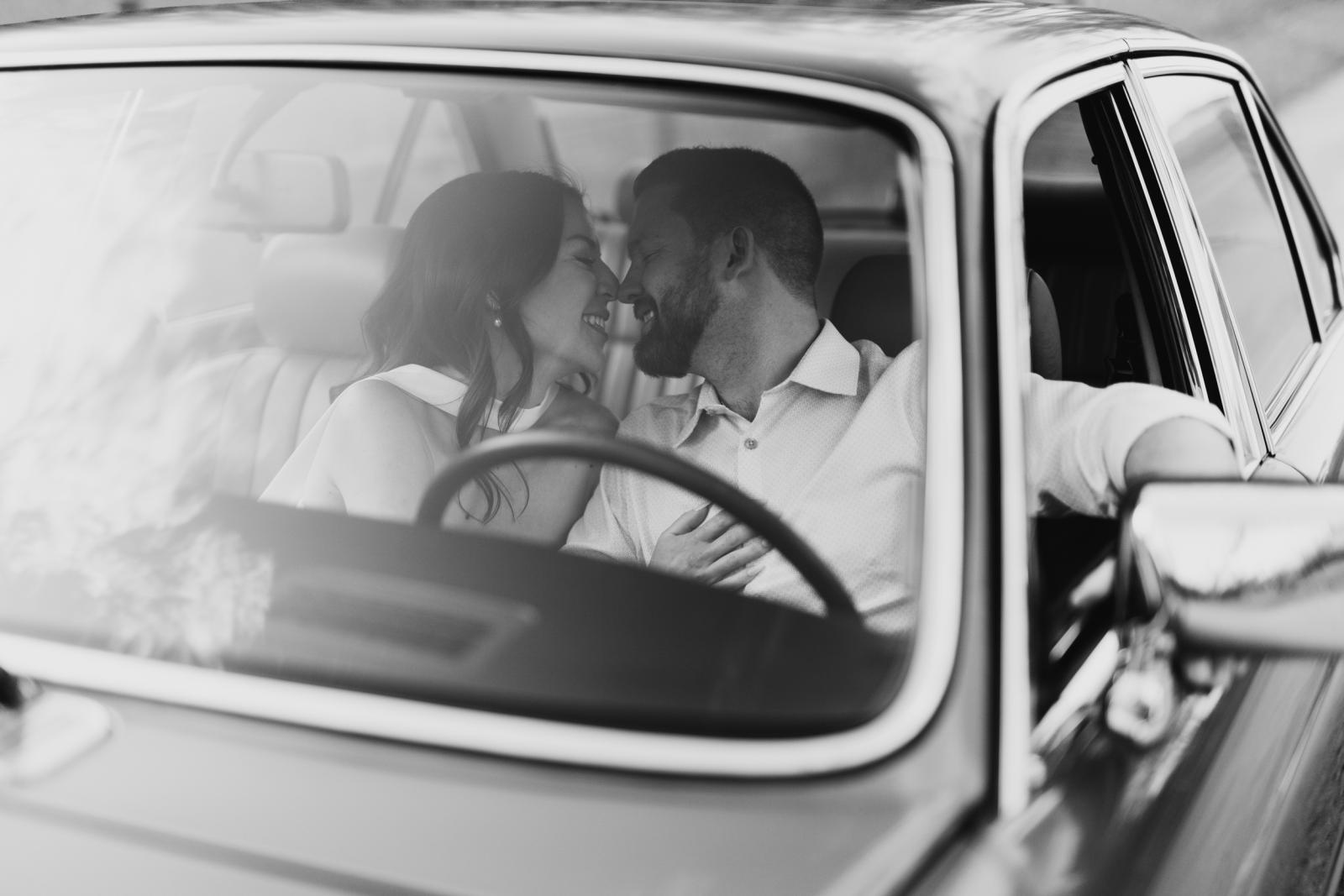
"What's the worst date you ever went on?" The couple starts telling the story. They're animated. They're laughing. They're looking at each other with the specific expression that only comes from a shared, ridiculous memory. The photographer is shooting the whole time, and the images look nothing like a portrait session — they look like two people being genuinely alive.
This conversational approach works especially well with people who are camera-shy. They can't be nervous and engaged in a good story at the same time. The story wins. The guard drops. The photographs happen as a byproduct of the conversation, and the couple barely notices they're being shot.
Directing Groups
Bridal parties and family groupings are where direction-over-posing pays the highest dividends. A traditional posed group photo — everyone in a line, shoulders square to camera, identical smiles — is a record of attendance. A directed group photo can be a portrait of relationships.
The difference is small but significant. Instead of "everyone line up and smile," try "everyone get in close and argue about who gives the best toast." The group laughs. They jostle. They're interacting with each other instead of staring at a lens. The resulting image has life in it because the people in it were alive when it was taken.
For family groupings, the direction can be even simpler. "Look at the couple instead of looking at me." This one instruction transforms a family formal from a stiff lineup into an image of a family watching two people they love, and the expressions are completely different from the camera-ready ones.
The challenge with groups is time. There are often dozens of combinations to get through, and the couple's energy is finite. This is where preparation matters — having the list of essential groupings ready so the creative direction can happen within an efficient structure.
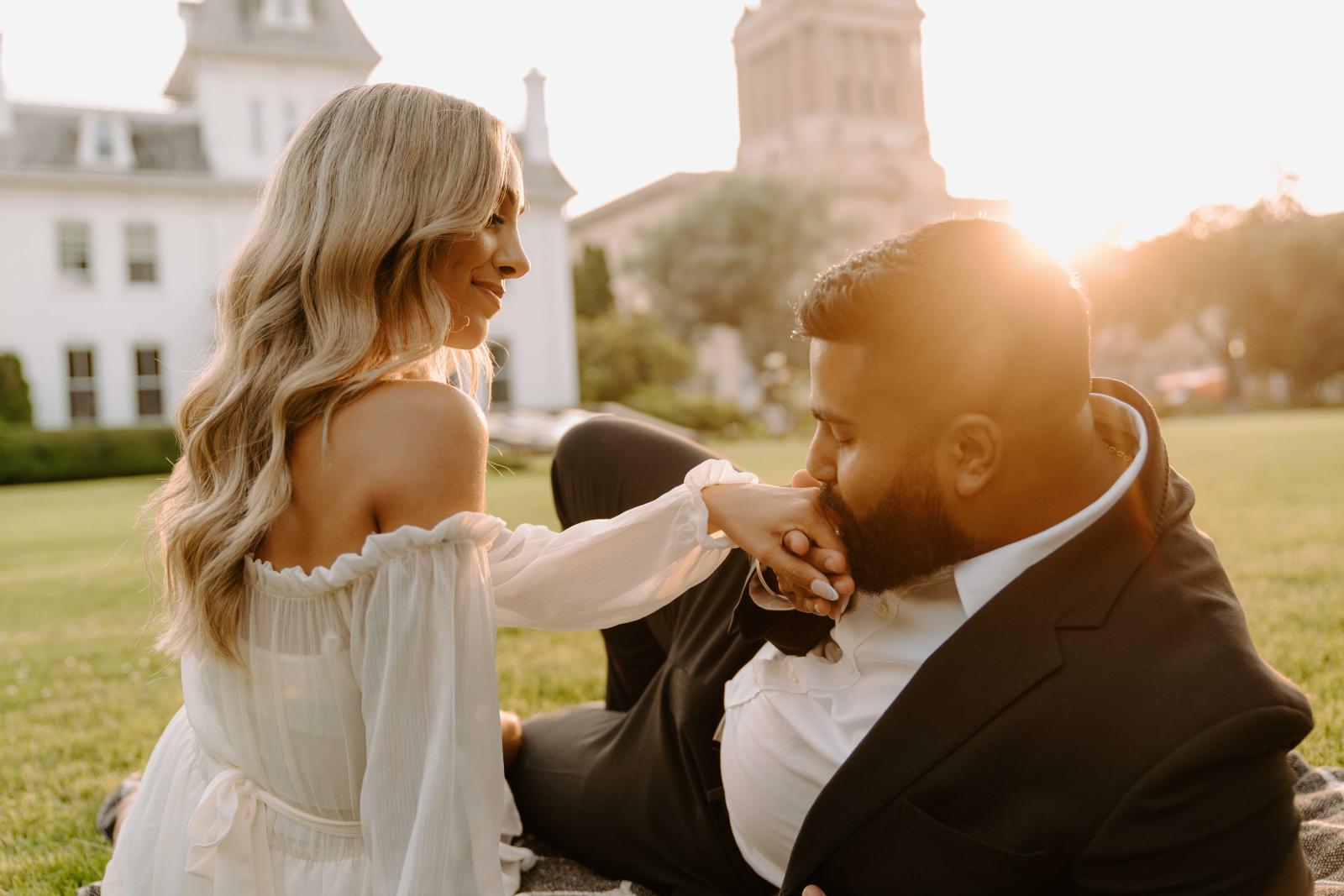
When Posing Is Appropriate
This article isn't arguing that posing is never right. Some images require it. A formal portrait of the couple for a newspaper announcement. A symmetrical bridal party lineup that the couple specifically requested. A styled shot for a submission to a publication where the editorial aesthetic demands a more constructed image.
The skill is knowing when to shift between the two modes. A photographer who can only direct will struggle with formal family portraits. A photographer who can only pose will produce a gallery that feels cold and arranged. The craft is fluency in both, with the judgment to know which one serves the moment.
Most of the day should be directed. The formal portraits are a small fraction of the total. And even within the formal frames, small acts of direction — asking the couple to look at each other instead of the camera, asking the family to react to something rather than just stand — can inject warmth into what would otherwise be an exercise in arrangement.
The Result: Images That Feel Like the Couple
When direction is done well, the couple looks at their gallery and says, "That's us." Not "that's a beautiful photo of two people who look like us." The distinction matters enormously. The images feel like the couple because they captured the couple being themselves — their specific brand of humour, their particular way of being close, the exact expression that one of them makes when the other says something funny.
This is what the client is actually paying for. Not technical precision. Not Instagram-worthy compositions. The ability to create the conditions in which real human moments emerge, and the skill to photograph them when they do.
Find a photographer who directs rather than just poses — browse the CWP member directory and look for portfolios where the couples look alive.
Continue the series
This is the fifth article in The Art of Wedding Photography series. Next: Emotion Over Perfection: Capturing Energy, Vibes, and Feeling.