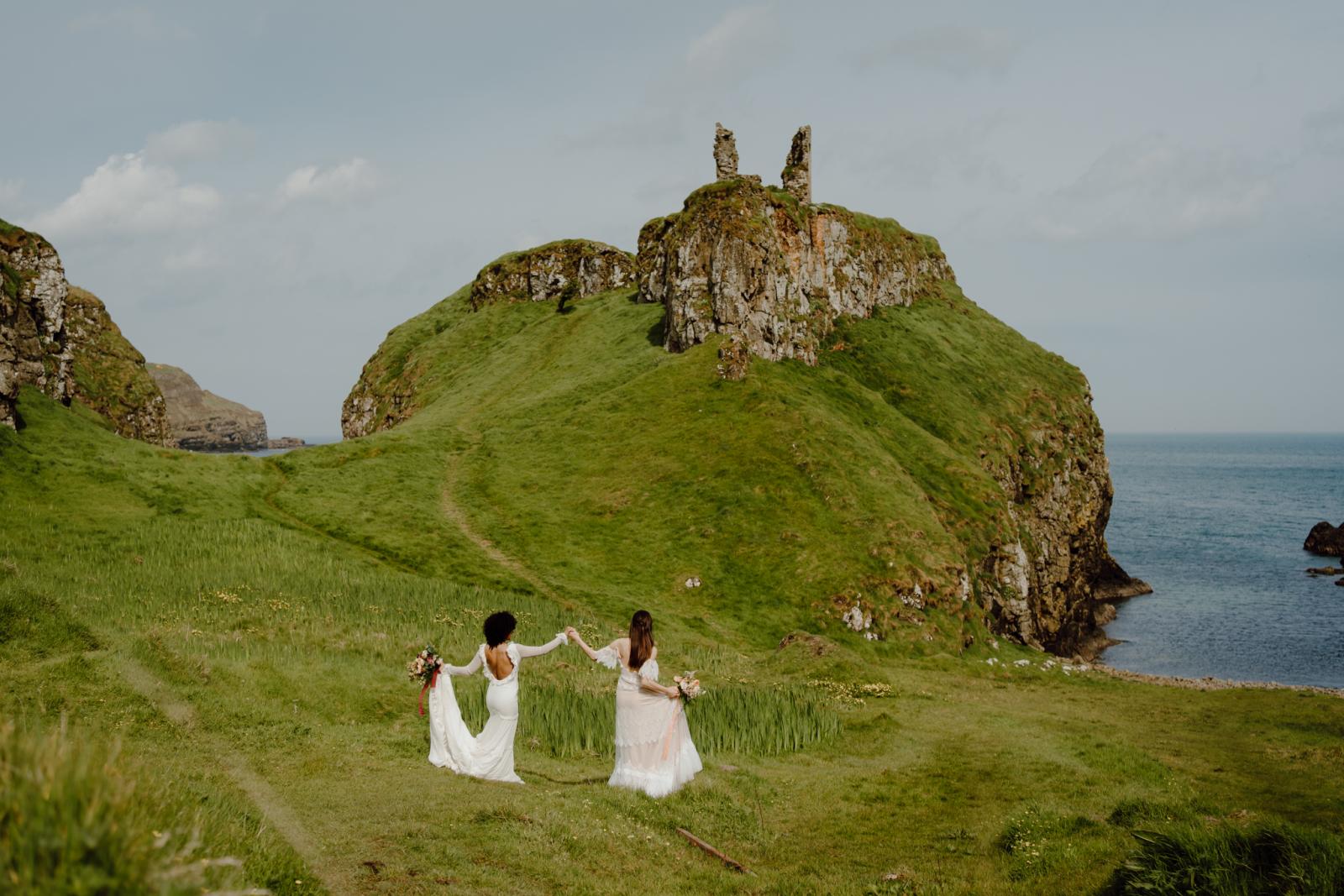
Shooting the Room: How to Photograph Ceremonies, Receptions, and Everything Between
A wedding day isn't one event. It's a sequence of environments, each with its own light, energy, pace, and emotional register. The getting-ready room has a specific rhythm. The ceremony has another. The cocktail hour is a different world from the dinner service, which is a different world from the dance floor at midnight.
The photographer who treats all of these environments the same way — same approach, same settings, same level of engagement — will produce a gallery that's strong in the moments that happened to match their default mode and weak everywhere else. The photographer who reads each environment and adjusts is the one who delivers a complete story.
This is the tenth article in our Art of Wedding Photography series.
Getting Ready: Controlled Intimacy
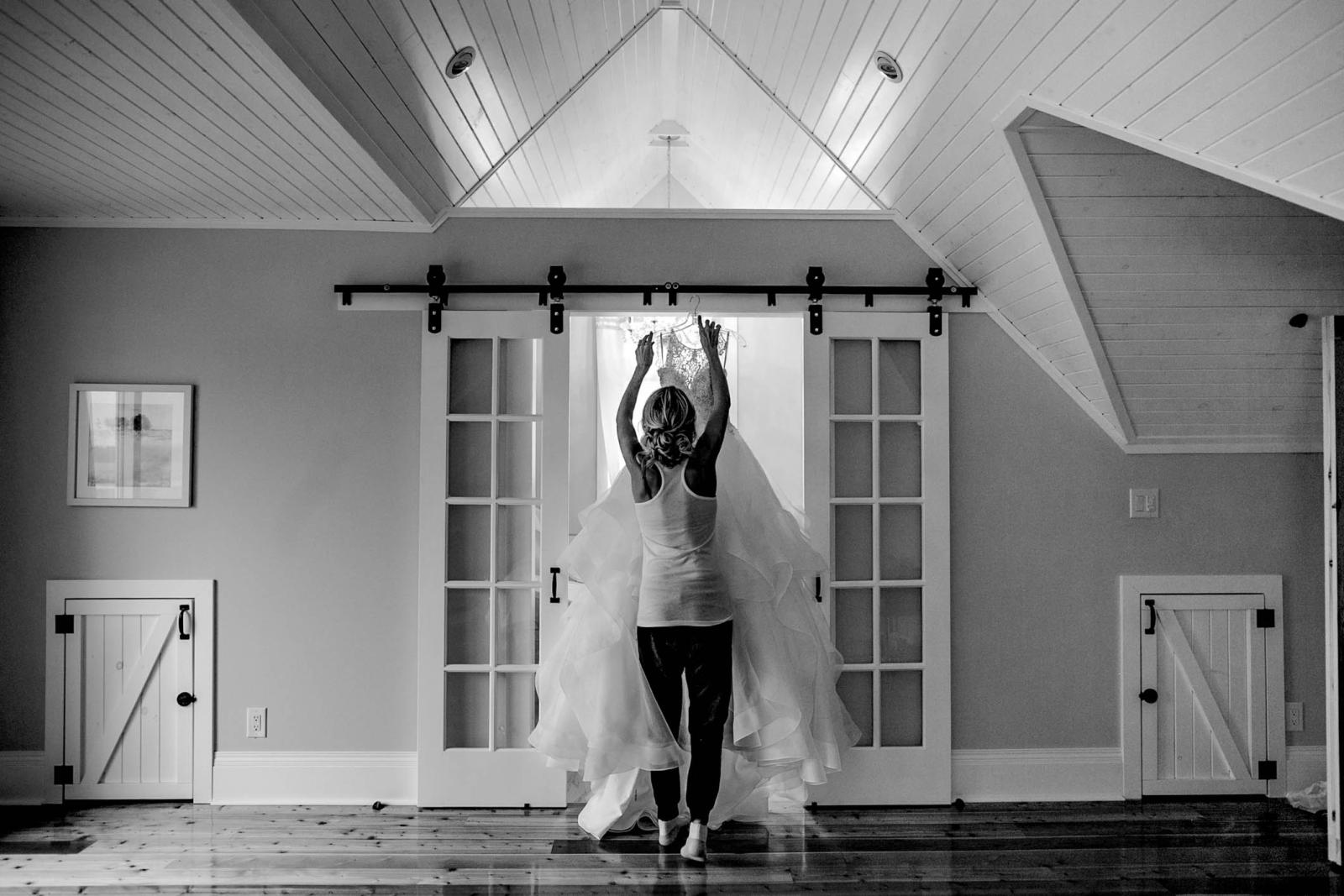
The getting-ready phase is the most controllable environment of the day. The space is usually small. The cast of characters is limited. The timeline, while flexible, has a natural arc — from relaxed preparation to increasing anticipation to the emotional crescendo of the dress or suit going on.
The photographic opportunity here is intimacy. This is one of the few times during the day when the couple is separate, surrounded only by the people closest to them, and the emotional volume is turned down enough that quiet moments are visible.
The light is almost always window light. Find the biggest, softest window in the room, and most of your getting-ready images will happen within six feet of it. The quality of that light — diffused through curtains, reflected off walls, falling directionally across faces — determines the visual character of the entire sequence.
The trap is over-directing. Getting ready is a documentary environment. The interactions between the bride and her mother, the groom and his friends, the flower girl and the ring bearer — these are genuine and fragile. A photographer who interrupts them to arrange a "candid" moment destroys the thing they're trying to capture. Observe. Stay quiet. Shoot from a respectful distance when the moment is private, and move closer when the energy shifts to something more public.
Detail shots — the rings, the invitation, the shoes, the accessories — belong in this phase because this is when these objects are available and unattended. But don't let detail shots consume the time that should be spent on human moments. A flat-lay of the invitation suite is nice. A photograph of the bride reading a letter from her partner is irreplaceable.
The Ceremony: Observation Under Pressure
The ceremony is the highest-stakes environment of the day. It happens once. There are no second takes. The photographer is usually restricted in movement — certain positions are off-limits, the aisle is occupied, the officiant has boundaries. And the most important moments — the vows, the rings, the kiss — happen in a compressed window where missing one means missing it forever.
This is pure documentary territory. The photographer's job is to be invisible and comprehensive. Comprehensive doesn't mean shooting everything — it means capturing the essential emotional beats: the couple's faces during the vows, the parents' reactions, the wedding party's expressions, the wide shot that establishes the setting, and the exit.
Position is everything. Most experienced ceremony photographers identify two or three positions in advance — during the rehearsal or a venue walk-through — and plan their movement between them to minimize disruption. A common approach: start at the back for the processional (capturing the full walk and the groom's reaction), move to the side for the vows and rings (capturing both faces in profile or three-quarter view), and reposition for the recessional.
The ceremony's biggest photographic challenge is usually light. Churches are dark. Outdoor ceremonies have harsh, overhead sun. Synagogues have mixed lighting. The photographer who's prepared for challenging light — high ISO, fast lenses, an understanding of how to expose for skin tones in difficult conditions — navigates this without the couple ever knowing there was a problem.
Cocktail Hour: The Forgotten Gold
Cocktail hour is the most undershot phase of most weddings. Photographers are often pulled away for portraits or family formals, leaving the cocktail hour documented by a second shooter or not at all. This is a mistake.
Cocktail hour is where guests relax for the first time. The ceremony's formality dissolves. People find each other. Conversations start that won't happen anywhere else during the day — the college roommate reuniting with the couple's parents, the two sides of the family meeting for the first time, the kids discovering each other. The emotional texture of these interactions is completely different from the ceremony or the reception, and it's photographic gold.
Even fifteen minutes of shooting during cocktail hour adds an entire chapter to the wedding story. Wide environmental shots of the space. Candid groups laughing. The couple stealing a private moment if they've escaped from formals early. Detail shots of the food, the venue styling, the cocktails that someone spent weeks choosing.
Dinner and Speeches: Reading the Arc
The dinner service and speeches occupy a long stretch of the reception, and the photographic approach needs to evolve as the energy does.
During dinner itself, the photographer's role is ambient and observational. Table interactions. The couple eating together (or trying to). The venue in its most dressed-up state, with candles lit and guests settled. This is atmospheric work — images that establish the feeling of the room.
Speeches change the energy entirely. They're performative but unpredictable, and they represent some of the most emotionally diverse photography of the day. A best man's speech might cycle through comedy, embarrassment, sincerity, and tears in three minutes. The photographer needs to be shooting the speaker AND the couple AND the parents simultaneously — or at least pivoting between them fast enough to catch the key reactions.
The toast that follows each speech is often the missed moment. Everyone raises a glass. The room's energy peaks for a single second. The photographer who's anticipating that beat captures the room at its most unified and celebratory.
The Dance Floor: Chaos as Canvas
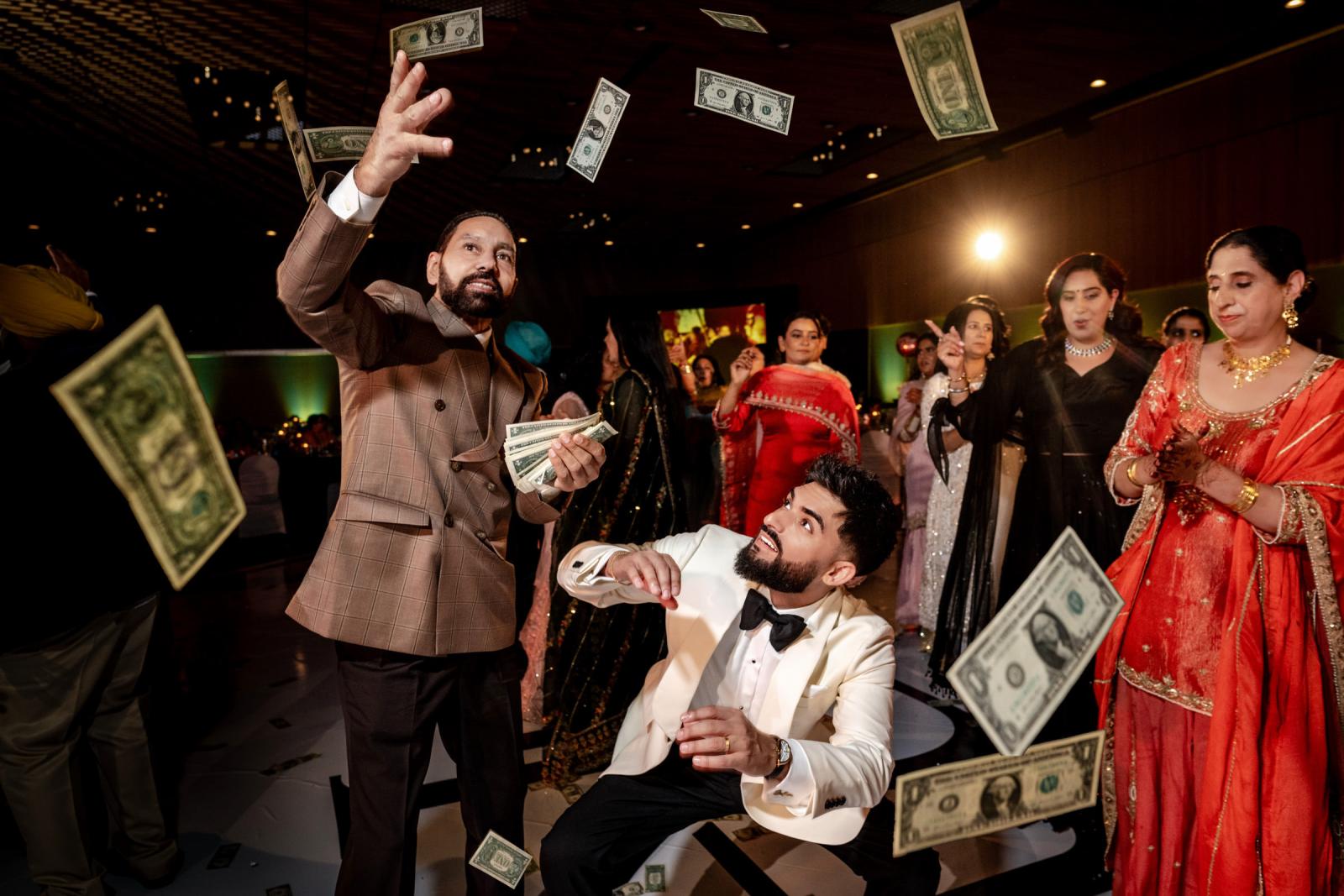
The dance floor is where technical control gives way to instinct. The light is terrible — or at least challenging. The movement is constant and unpredictable. The space is crowded. The subjects are in constant motion, backlit by DJ lighting that shifts colour every few seconds.
This is where the photographer's full toolkit gets tested. Flash technique for freezing motion. Slow shutter drag for creative blur. High ISO tolerance for available-light-only moments. And the emotional instinct to know which chaotic frame actually tells a story versus which one is just visual noise.
The dance floor images couples love most are rarely the cleanest ones. They're the ones with energy. The blur of a spinning skirt. The silhouette against a coloured wash. The tight crop of two faces mid-laugh, slightly grainy, slightly imperfect, completely alive. The dance floor rewards photographers who prioritize feeling over technical precision.
The Transitions: Where the Real Day Lives
The most experienced wedding photographers know that the best material often lives in the transitions between the programmed events. The walk from the ceremony to the cocktail hour. The couple's entrance to the reception. The quiet five minutes after the last speech, when the couple sits alone at the head table and just breathes.
These transitions are where the couple drops the performance. They're not "on" for the ceremony or "on" for the portraits or "on" for the speeches. They're just moving between moments, and their guard is down. The outtake potential in these windows is enormous.
Shooting transitions requires the photographer to never mentally clock out. There's no "off" period during a wedding day. The image that defines the gallery might happen during the three-minute walk from the church to the car — the moment nobody planned, nobody expected, and nobody noticed except the photographer who was paying attention.
Telling the Whole Story
The goal of shooting the room — every room, every phase, every transition — is narrative completeness. When the couple looks at their gallery, they should be able to feel the full emotional arc of their day: the anticipation of getting ready, the gravity of the ceremony, the joy of the celebration, and the quiet moments in between that only existed for them.
This is what separates a complete wedding photographer from a specialist. The ceremony expert who can't shoot a dance floor. The portrait wizard who struggles with documentary moments. The moody, atmospheric shooter who can't produce clean family formals. Each of these specialists delivers a gallery with holes in the story.
The photographers in the CWP member directory are recognized for the breadth of their work — the Canadian Wedding Photography Awards span categories from Ceremony to Reception to Couple to Photojournalism precisely because the full story matters.
Every room. Every phase. The whole day. That's the job.
Continue the series
This is the tenth article in The Art of Wedding Photography series. Next: Second Shooting: The Most Underrated Education in Wedding Photography.